INDUSTRIAL EXECUTION · KARACHI, PAKISTAN

Industrial Exhaust & Ducting Fabrication and Installation

Fabricated exhaust and ventilation interfaces that account for temperature, vibration, discharge routing and maintenance access.

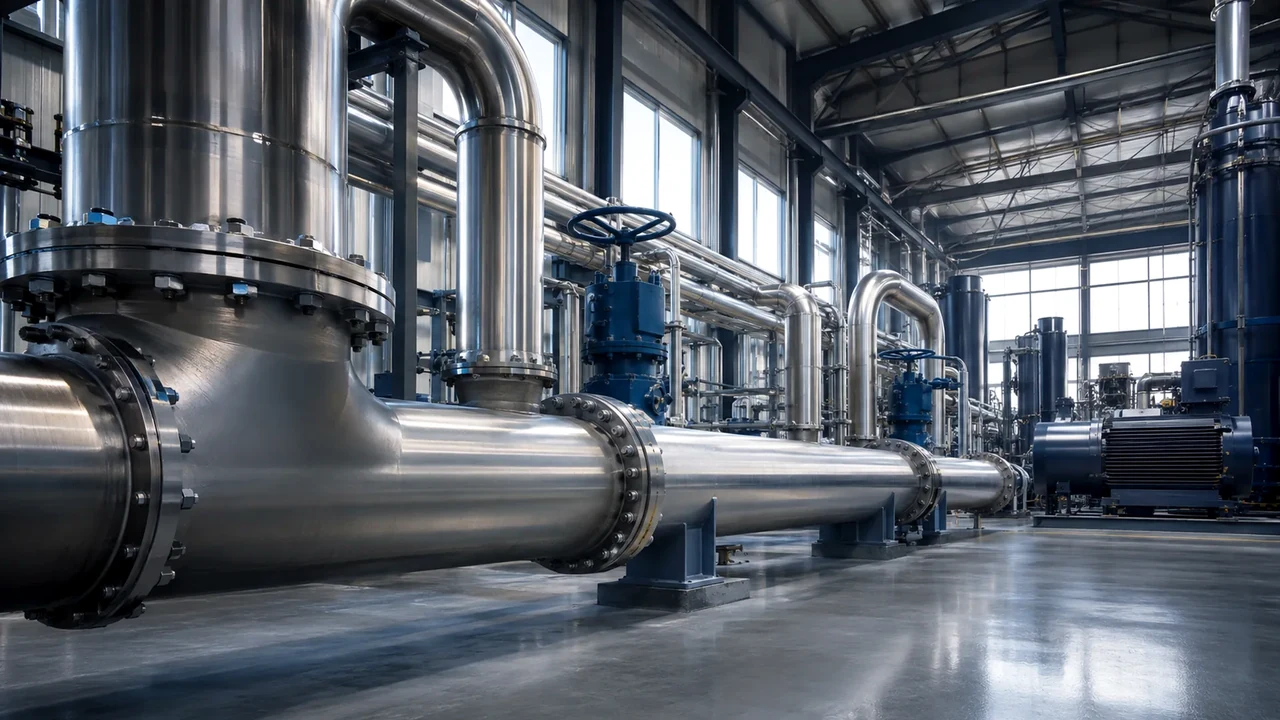
Industrial mechanical works capability illustration
Capability imagery is illustrative; it is not a completed-project reference.

THE WORK PACKAGE

Industrial Exhaust & Ducting for industrial facilities

V Forge reviews industrial exhaust and ducting requirements as part of a coordinated mechanical installation. Generator rooms and utility areas need practical routes for exhaust piping, radiator discharge and ventilation without blocking access to equipment. Fabrication dimensions and installation details are checked against the actual site and the approved technical requirements.

Project location, quantities, design responsibilities and supply/installation boundaries are confirmed during scope review. Share the available drawings and BOQ through the Project Desk to start the discussion.

SCOPE & INTERFACES

What the installation needs to address

Generator exhaust interfaces

Exhaust pipework, silencers and associated fabricated components are coordinated with the equipment connection, the approved route and the discharge arrangement. Equipment limits remain governed by the OEM requirements and approved design.

Radiator and hot-air discharge ducting

Duct sections, transitions, louvers and equipment interfaces are fabricated around the required air path and available space. Connections should allow practical inspection and equipment servicing.

Industrial ventilation and fabricated ductwork

MS or SS ductwork, hoods and related assemblies can be reviewed for the particular application. Material thickness, reinforcement, connection style and corrosion protection are determined by the specification.

Stacks, supports and movement interfaces

Support locations, clearances and access are coordinated with the structure and surrounding services. Expansion, flexible connections and vibration interfaces are included where required by the approved details.
FROM DRAWINGS TO HANDOVER

Plan the details before site execution

Our execution method ↗
01

Site and equipment information

Provide the equipment make/model, exhaust connection details, temperature information, required airflow where applicable, route drawings, discharge location and dimensional restrictions. Existing structures and adjacent services should be identified.

02

Fabrication and installation sequence

Field measurements, workshop fabrication, fit-up and installation sequencing help reduce unsuitable transitions and avoidable site alterations. Lifting, access and work windows are reviewed before installation.

03

Checks before handover

Inspection may cover dimensions, supports, joints, alignment, clearances and access. Leakage, functional or commissioning checks are agreed for the specific system; no universal performance limit is assumed.

QUOTATION BRIEF

Send the information you already have

A defined scope helps identify missing interfaces, inclusions and site constraints before pricing.

  • Equipment drawings and connection dimensions
  • Exhaust/airflow requirements and OEM limits
  • Route, discharge position and available clearances
  • Material and insulation specifications
  • Access, lifting and shutdown constraints
Share drawings / BOQ ↗

Use the existing project enquiry form. Files and requirements go through the established business-desk workflow.

PRACTICAL QUESTIONS

Before you request a quotation

Can you review generator-room exhaust and radiator ducting together?

Yes. The exhaust route, radiator discharge, ventilation paths and service access can be reviewed as one coordinated scope, with design and equipment responsibilities stated clearly.

Do you fabricate ducts to site dimensions?

Fabrication can be based on approved drawings and verified dimensions. Any change affecting airflow, structural support or equipment limits should be reviewed before manufacture.

Which material is suitable for industrial ducting?

The temperature, exposure, corrosion conditions and project specification determine the suitable material and construction. The choice is confirmed for the application rather than selected from appearance alone.

ENGINEERING TOPICS

Technical thinking behind better site execution.

Practical technical notes tied to industrial MEP, power and utility execution.

View all engineering notes